Double Brokering in Freight: How the Scheme Works and How to Catch It Early
A load booked, silently re-brokered, hauled by a trucker who never gets paid — and a shipper on the hook twice. The anatomy of double brokering and the checks that stop it.
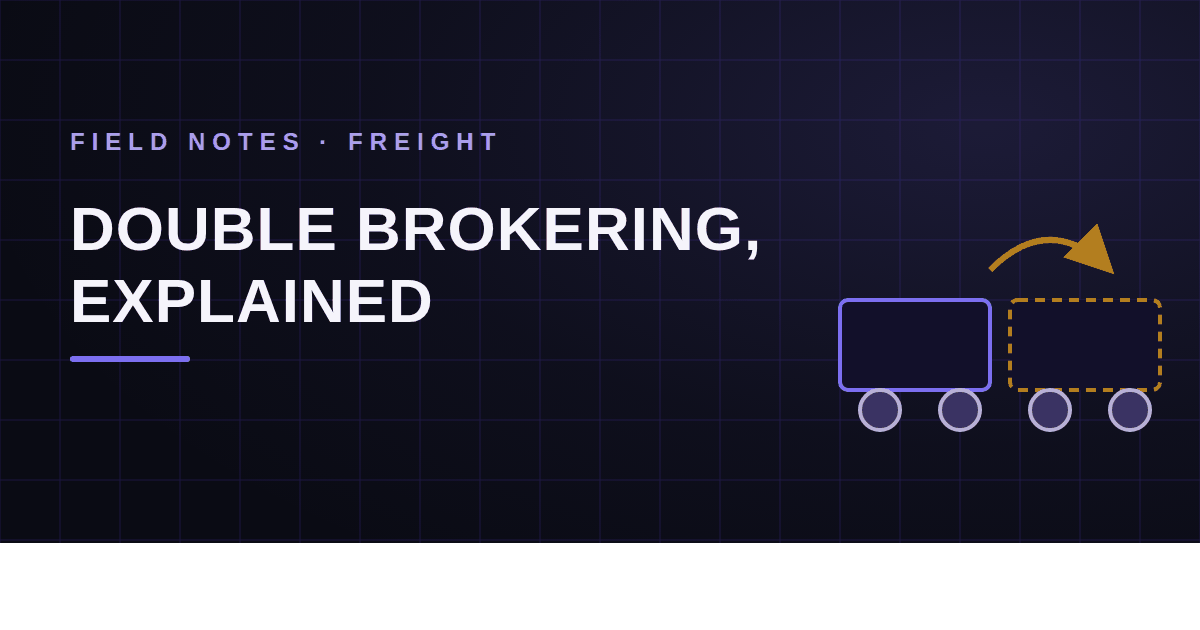
A load gets booked with a carrier at a fair rate. The paperwork's clean: authority letter, insurance certificate, signed rate confirmation. The load picks up on time. Then, weeks later, a trucking company nobody's heard of calls about an unpaid invoice for hauling it — and the "carrier" who booked the load has stopped answering, taken the payment, and vanished. Now there's a trucker with a legitimate claim, a broker out the money, possibly a cargo claim with no valid insurance behind it, and a shipper wondering how many other loads went through the same hole.
That's double brokering — and the freight industry has spent the last several years treating it as one of its biggest fraud problems, because the scheme scales.
The scheme, step by step
- Acquire an identity. The fraudster either impersonates a real carrier (their MC number, their name, a lookalike email domain) or buys/registers a motor carrier authority to burn.
- Win the load. Book freight from brokers at market rate, looking like an ordinary carrier with ordinary paperwork.
- Re-broker it silently. Post the same load — without authority or disclosure — at a lower rate. A real trucking company takes it, believing they're working a legitimate load.
- Let honest people do the work. The real carrier hauls and delivers. Documents flow; everything looks normal from the outside.
- Collect and disappear. The fraudster invoices the broker, gets paid, never pays the truck, and cycles to the next identity before the complaints catch up.
The damage lands on everyone except the fraudster: the trucker is out weeks of work and often pursues the broker or shipper for payment; the broker may effectively pay twice; and if cargo was damaged, the insurance in the file belongs to an entity that never touched the freight.
Why it works
Freight moves fast and trusts paper. Booking decisions happen in minutes, identity is established through documents — authority letters, certificates of insurance, rate confirmations, bills of lading — and every one of those documents can be forged or altered. Add the lookalike problem (impersonating a real carrier with a genuine safety record) and the paperwork can be simultaneously authentic-looking and completely disconnected from the party you're actually dealing with.
Document tells
The paper trail usually leaks before the money does:
- Authority age vs. story. An MC number granted months ago attached to a company claiming years of history. New authority isn't damning alone — but new authority chasing high-value loads with perfect paperwork is a pattern.
- Identity mismatches. Company name, MC/DOT pairing, and remittance details that don't line up with the official carrier record — or a remit-to that routes to a factoring company nobody can verify.
- Altered rate confirmations. Rate cons that have been edited after generation — changed amounts, swapped contact blocks, pasted signatures.
- Insurance oddities. COIs that fail date logic, name a different insured than the carrier record, or come from an agency that doesn't answer.
- Channel tells. Email domains one character off the real carrier's, freshly registered, or free-mailbox dispatch addresses on a "established fleet."
Process tells
Behavior flags the scheme even when documents pass:
- Instant acceptance of a posted load at the offered rate, no negotiation, by a carrier you've never used.
- Dispatch friction. The person who booked is smooth; the "driver" is unreachable, changes last minute, or knows nothing about the company that booked.
- Tracking resistance. Refusal or excuses on tracking, because the location data would reveal a truck belonging to someone else.
- Remit-to changes shortly after booking — the classic sign the payment path is the whole point.
Catching it early
The counter is verification through channels the counterparty doesn't control, before the load moves. Confirm the carrier's authority and safety record against the official registry, then contact the carrier through the phone number on record there — not the one on the paperwork — to confirm they actually booked your load. Verify the COI with the issuing agency. Check the email domain's age and its distance from the carrier's real domain. Run the rate con and COI through document forensics on the way in.
None of these steps is exotic, which is the point: the identity-verification sequence is the same one every industry uses — freight just needs it to run at booking speed. Teams that automate the checks into carrier onboarding and load assignment catch the scheme at the paperwork stage, where it costs a declined booking instead of a double payment.
Frequently asked questions
What is double brokering in one sentence?
A party books a load posing as the carrier, secretly re-brokers it to a real trucker, collects payment, and disappears without paying the trucker — leaving the shipper and broker exposed to double payment and uninsured cargo.
Is double brokering always fraud?
The scheme described here is. Re-brokering itself — a carrier handing a load to another carrier — violates most broker-carrier agreements when undisclosed, but the criminal version adds identity fraud and payment theft. The distinction matters less in practice than prevention: disclosure and verification make both versions visible.
What's the single best early check?
Contact the carrier through the phone number on their official authority record — not the number on the documents they sent — and confirm they booked your load. Impersonation collapses at that step, because the real company has no idea what you're talking about.
Put it to the test
Scan a document and get a plain-English verdict in seconds. Free to start.
Keep reading
Certificate of Origin Fraud in Global Trade Documents
A certificate of origin decides tariffs, trade benefits, and sanctions compliance — high-value reasons to forge it. The two shapes of origin fraud, and how to catch each.
Fake Certificates of Insurance: How to Spot Them Before They Cost You
A COI is a promise printed on one page — and one of the most-faked business documents. What a certificate actually proves, the red flags, and how to verify one properly.
Bill of Lading Fraud: Anatomy of a Fake BOL
A walkthrough of how bill of lading fraud actually unfolds — from a forged rate confirmation to a doctored proof of delivery — and where the paperwork gives the scheme away.