Apostille vs. Legalization: Verifying Documents Across Borders
International documents carry authentication chains most reviewers have never been taught to read. How apostilles and consular legalization work — and how both get faked.
Document fraud, forensics, and verification workflows — practical writing from the team building the engine.
Six practical checks — from metadata dates to hidden revision history — that reveal whether a PDF was modified after it was created, and what each one can and can't prove.
International documents carry authentication chains most reviewers have never been taught to read. How apostilles and consular legalization work — and how both get faked.
A forensic finding is only as strong as the custody story behind the file. Hashes, handling, and documentation — how to keep digital document evidence defensible.
Pay stubs in 60 seconds, bank statements to order, "novelty" diplomas — an entire industry sells document fraud as a service. How the template economy works and what its products have in common.
Undervalued commercial invoices dodge duties, launder value, and expose importers to seizure. How the double-invoice game works and how compliance teams catch it in the paper.
Fabricated audit opinions and doctored financial statements borrow credibility no fraudster earned. How fake audits are built, famous ways they unravel, and how to verify one.
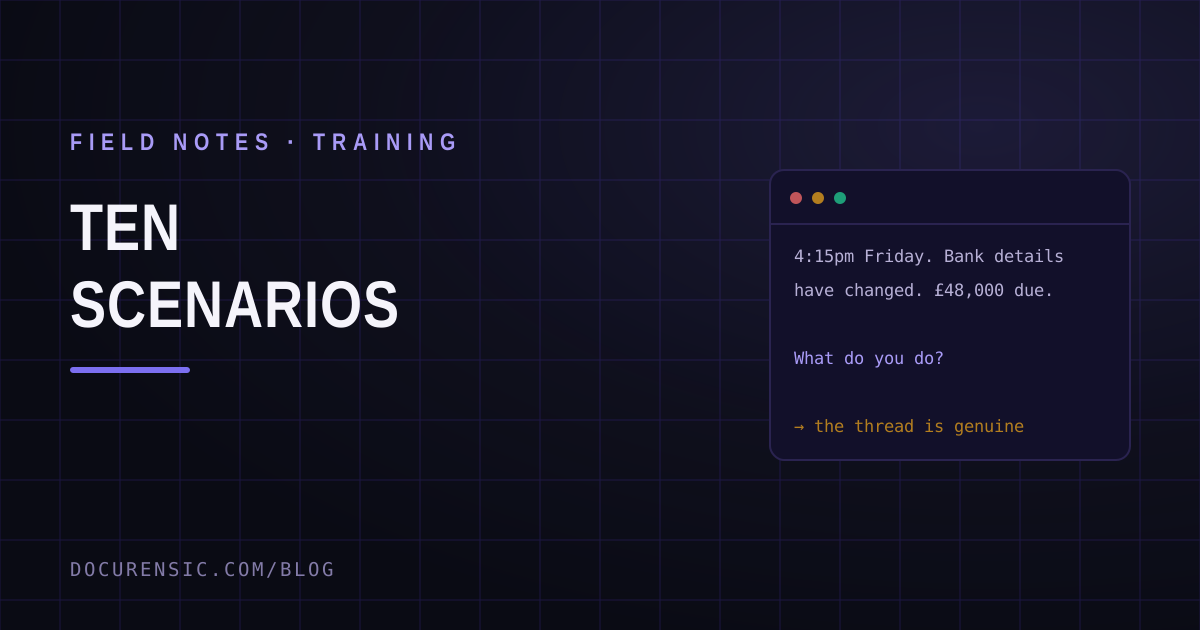
Ten fifteen-minute scenarios with a defensible wrong answer in each, built to be read aloud and argued about — free to adapt, brand and use in your own training, no attribution required.
Gig platforms onboard workers with document checks — and fraudsters attack exactly there. Fake licenses, rented accounts, and synthetic profiles, plus the checks that hold.
POF letters grease real estate deals, trade transactions, and investment schemes — and they are trivially forged. What a real one proves, what a fake one costs, and how to verify.
Only one of these detects a change to a document. What each standard actually asserts, where signatures stop covering the file, and why a missing set of content credentials proves nothing at all.
Public money moves on paperwork — and fraudulent applications exploit exactly that. How grant and subsidy fraud works, and the document checks funders keep skipping.
Fabricated receipts, doctored serial numbers, and staged damage photos drive billions in warranty and returns abuse. The document tells that separate real claims from manufactured ones.
Fifty-plus terms from PDF structure, image forensics and the signature world, defined for the person reading a forensic report rather than writing one — including what each one does not mean.