Certificate of Origin Fraud in Global Trade Documents
A certificate of origin decides tariffs, trade benefits, and sanctions compliance — high-value reasons to forge it. The two shapes of origin fraud, and how to catch each.
In global trade, a certificate of origin is a small document with an outsized job: it declares where goods were actually made. That declaration determines tariffs, unlocks or blocks preferential trade treatment, satisfies import regulations, and — increasingly — proves that a shipment isn't touching a sanctioned or restricted source. Which is precisely why it's forged. When a piece of paper can turn a high-tariff shipment into a low-tariff one, or launder a restricted origin into an acceptable one, someone will fake the paper.
If you import, finance trade, or handle cross-border shipments, origin fraud is one of the quieter document risks on your desk, and one of the more consequential when it goes wrong.
Key takeaways
- A certificate of origin drives tariffs, trade-agreement eligibility, and sanctions compliance — high-value reasons to forge it.
- Origin fraud can be a forged certificate, or a genuine certificate that misstates the true origin (transshipment).
- The document rarely travels alone — checking it against the commercial invoice, packing list, and bill of lading is where fraud surfaces.
- Both the artifact (is the certificate authentic?) and the story (does the origin hold up?) need checking.
The two shapes of origin fraud
The forged certificate. The document itself is fake or altered — a fabricated certificate, a real one with the origin country changed, or a copied chamber-of-commerce or authority stamp. Here it's a straightforward document-authenticity problem, and the certificate carries the usual tells: a pasted seal, a country field in a mismatched font, metadata showing the "scan" was edited rather than issued.
The genuine certificate that lies. Subtler and harder. The certificate is technically authentic — properly issued — but the declared origin doesn't reflect where the goods were really made. The classic mechanism is transshipment: goods from origin A are routed through country B, relabeled, and shipped onward with paperwork presenting B as the origin. The document is real; the reality behind it isn't. This is the version that matters most for sanctions and tariff evasion, and no amount of examining the certificate's authenticity catches it, because the certificate is authentic.
Check the document, then check the story
Origin fraud demands two separate reads.
Authenticate the certificate. Confirm the issuing authority is legitimate and the certificate is genuinely theirs — not a copied template with a pasted seal. Look for the tampering signs any forged document shows: inconsistent fonts, an altered origin field, a low-resolution stamp, structural signs of editing. This catches the forged-certificate half.
Reconcile it against the shipment's other documents. A shipment generates a whole set of documents — the commercial invoice, the packing list, the bill of lading — and they all reference the same goods. They have to agree. Origin fraud, especially transshipment, tends to create small disagreements across that set:
- Does the stated origin square with the routing on the bill of lading?
- Do the goods, quantities, and descriptions match across every document?
- Does the shipment's path make economic sense, or does it detour through a country for no reason but the paperwork?
- Do the invoice and supporting documents tell a consistent story about where these goods came from and where they went?
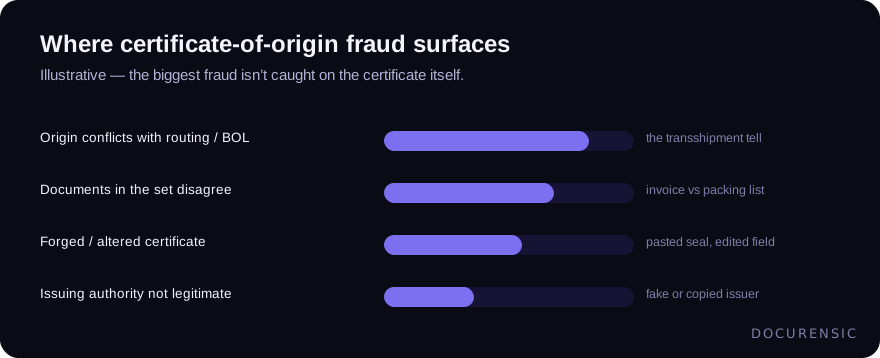
The top of that chart is the important part: the highest-value origin fraud isn't caught by staring at the certificate. It's caught by noticing that the certificate disagrees with the route the goods actually took.
Why it's worth the effort
The consequences of getting this wrong aren't just a mispriced shipment. Misdeclared origin can mean unpaid duties you're later liable for, trade-agreement benefits claimed fraudulently, and — most seriously — inadvertently handling goods from a restricted or sanctioned source, with the compliance exposure that carries. For trade financiers, a shipment whose origin story doesn't hold up is a credit and compliance risk wearing a routine document.
The defense is the same discipline that beats freight and logistics fraud generally: don't trust any single document in the set on its own. Authenticate the certificate, then make the whole document package agree with itself and with the physical reality of how the goods moved. Origin fraud lives in the gaps between documents that were supposed to tell one consistent story.
Frequently asked questions
What is certificate of origin fraud?
It's misrepresenting where goods were manufactured, either by forging or altering the certificate of origin, or by using a genuine certificate that states a false origin — typically through transshipment, where goods are routed through an intermediary country and re-papered to disguise their true source. The motive is evading tariffs, wrongly claiming trade-agreement benefits, or bypassing sanctions.
How do you detect a fake certificate of origin?
Check both the document and the story. Authenticate the certificate itself for tampering — pasted seals, altered origin fields, editing metadata, illegitimate issuers. Then reconcile it against the shipment's other documents (commercial invoice, packing list, bill of lading) and the actual routing. Transshipment fraud, in particular, shows up as an origin that conflicts with how the goods really moved.
What is transshipment fraud?
It's routing goods from their true origin through a third country, relabeling them, and shipping onward with documents presenting the third country as the origin. Because the resulting certificate may be genuinely issued, the fraud isn't in the document's authenticity but in the false story it tells — caught by checking the shipment's routing and cross-document consistency rather than the certificate alone.
Put it to the test
Scan a document and get a plain-English verdict in seconds. Free to start.
Keep reading
The Two-Invoice Trade: Customs Undervaluation and the Paper That Hides It
Undervalued commercial invoices dodge duties, launder value, and expose importers to seizure. How the double-invoice game works and how compliance teams catch it in the paper.
Double Brokering in Freight: How the Scheme Works and How to Catch It Early
A load booked, silently re-brokered, hauled by a trucker who never gets paid — and a shipper on the hook twice. The anatomy of double brokering and the checks that stop it.
Fake Certificates of Insurance: How to Spot Them Before They Cost You
A COI is a promise printed on one page — and one of the most-faked business documents. What a certificate actually proves, the red flags, and how to verify one properly.