Expense Report Fraud: 8 Small Leaks That Add Up Fast
Expense fraud is rarely a heist — it's a slow leak that hides in the volume. The eight patterns behind most of it, and how to catch each without interrogating every report.
In this list
- 1. Inflated amounts on real receipts
- 2. Fabricated receipts
- 3. Duplicate submissions
- 4. Personal purchases disguised as business
- 5. Round-number and just-under-threshold claims
- 6. Mileage and per-diem padding
- 7. Altered dates to fit the policy window
- 8. Collusion with a vendor
- Catching it without the interrogation
- Frequently asked questions
Expense fraud is rarely the dramatic kind. It's not a heist; it's a slow leak. A padded meal here, a personal purchase slipped in there, a receipt nudged from $40 to $140, the same taxi claimed twice. Individually, each item is small enough to feel not worth the fuss. Collectively, across a whole organization and a whole year, the leak adds up to real money — and because every single item is small, it hides beautifully in the volume. Here are the eight patterns that account for most of it, and how to catch each without turning every expense report into an interrogation.
1. Inflated amounts on real receipts
The most common move: a genuine receipt with the total edited upward. A $40 dinner becomes $140. Because the receipt is real, it passes a glance — the logo's right, the format's right, only the number changed. This is ordinary document tampering, and it leaves ordinary tells: a total in a slightly different font than the rest of the receipt, digits that don't align, a figure that doesn't match the line items above it. The written detail and the total should reconcile; when they don't, the total was edited.
2. Fabricated receipts
No real receipt at all — a fake generated from a template or a receipt-maker. These fabricated documents have no genuine transaction behind them, so they often fail on realism: a merchant format that doesn't match how that business actually issues receipts, an impossible tax calculation, metadata revealing a generator rather than a point-of-sale system. If it was manufactured whole, it usually can't perfectly imitate a real merchant's output.
3. Duplicate submissions
The same expense claimed more than once — submitted twice in one report, split across two reports, or claimed by two people who shared the cost. Each submission looks fine alone; the fraud is only visible when you compare across reports and time. Matching on amount, date, and merchant across an employee's history (and across colleagues on the same trip) is what surfaces it.
4. Personal purchases disguised as business
A personal item run through as a business expense — the weekend meal coded as a client dinner, the personal gadget as "office supplies." The receipt is genuine; the categorization is the lie. This one resists document forensics because nothing's forged, so it's caught by policy and pattern: expenses that don't fit the role, the trip, or the business context, and categories that don't match the merchant.
5. Round-number and just-under-threshold claims
Real spending is messy — $37.82, $114.50. Fabricated or padded expenses cluster at round numbers and, tellingly, just below approval thresholds. A stack of expenses at exactly $24 when the receipt-required line is $25 isn't a coincidence; it's someone reading the policy and staying just under it.
6. Mileage and per-diem padding
Where reimbursement is by distance or day rate, the padding moves into the numbers themselves — inflated mileage, trips that didn't happen, per-diems claimed for days spent at home. There's often no receipt to forensically examine, so the checks are consistency ones: does the mileage match the actual route, do the travel dates line up with calendars and other records, does the pattern hold up.
7. Altered dates to fit the policy window
An expense from outside the reimbursable period, with the date edited to fall inside it — or a personal-trip expense re-dated to overlap a business trip. The date is one of the easiest fields to alter and one of the least scrutinized. Checking that the date on the receipt is consistent with the file (and with the receipt's own metadata) catches the re-dating.
8. Collusion with a vendor
The hardest to catch: an employee and a vendor cooperating on inflated or fictitious invoices, splitting the difference. Because both sides support the story, single-document checks pass. This surfaces only through pattern analysis — a vendor that only ever appears in one person's expenses, amounts that trend suspiciously, a relationship that doesn't reconcile with delivered value. It overlaps with broader accounts-payable and vendor risk, and it's where document checks hand off to analytics.
Catching it without the interrogation
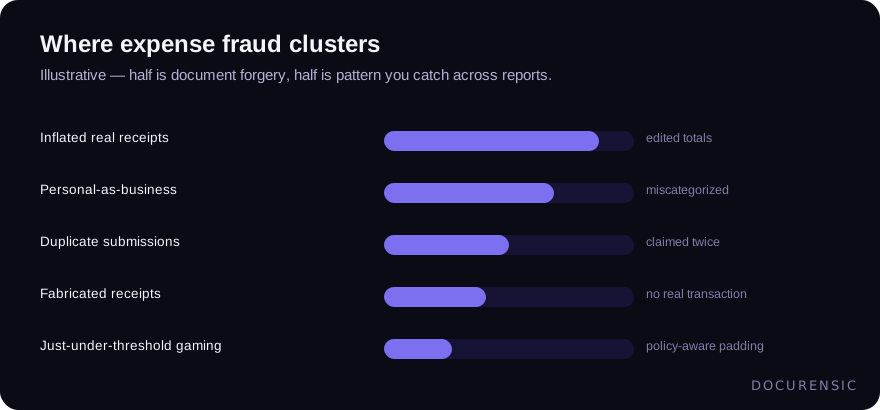
Notice the split across those eight. Roughly half — inflated receipts, fabricated receipts, altered dates — are document problems, caught by authenticating the receipt: reconciling totals with line items, checking fonts and metadata, spotting generated documents. The other half — duplicates, miscategorization, threshold gaming, collusion — are pattern problems, caught by comparing across reports, people, and time.
So run both, and run them automatically. Authenticate receipts with a document check so edited and fabricated ones get flagged at submission, and layer pattern analysis over the whole expense stream so duplicates and gaming surface without a human hunting for them. The goal isn't to treat every employee as a suspect — it's to let the honest 95% flow through untouched while the leaks get caught by a check that never gets tired, never gets busy, and never waves something through because it's only forty dollars.
Frequently asked questions
What's the most common type of expense report fraud?
Inflating the amount on a genuine receipt — editing a real $40 receipt to read $140. Because the receipt is authentic apart from the changed total, it survives a casual glance, but the edited figure leaves tampering tells and usually fails to reconcile with the receipt's own line items. Miscategorizing personal purchases as business is a close second.
How can you detect a fake or altered receipt?
Check the document itself: does the total reconcile with the line items, are the fonts and alignment consistent, does the metadata suggest a receipt generator rather than a point-of-sale system, and does the merchant format match how that business really issues receipts? Edited totals and fabricated receipts both leave forensic traces that a document check flags at submission.
Can you catch expense fraud that doesn't involve a forged document?
Yes — with pattern analysis rather than document forensics. Duplicate claims, personal-as-business miscategorization, just-under-threshold gaming, mileage padding, and vendor collusion involve no forged paper, so they're caught by comparing expenses across reports, people, and time. The strongest programs combine receipt authentication with this pattern layer, since each catches what the other misses.
Put it to the test
Scan a document and get a plain-English verdict in seconds. Free to start.
Keep reading
Vendor Bank Account Change Requests: The 60-Second Check
The most expensive AP fraud isn't a fake invoice — it's a real one paid to a fraudulently changed bank account. The one habit that stops payment-redirection fraud.
8 Accounts Payable Fraud Controls That Actually Get Used
Controls fail when they're annoying. Eight AP fraud controls teams actually follow — from vendor master hygiene to callback verification and document forensics.
9 Invoice Fraud Red Flags Every AP Team Should Check
The nine warning signs accounts-payable teams see over and over in fraudulent invoices — and the two-minute checks that catch each one before payment goes out.