Friendly Fraud: When Your Own Customer Files the Chargeback
The customer bought it, received it, then told their bank they didn't — and won. Why friendly fraud slips past fraud filters, and how documentation wins the dispute.
The most frustrating fraud a merchant faces isn't a stolen card. It's the customer who genuinely bought the thing, received the thing, and then told their bank they didn't — and won. It's called friendly fraud, which is a generous name for it, and it sits in an awkward gap: the transaction was legitimate, so your fraud filters passed it, and now the dispute system is being used against you by the buyer themselves.
If you sell anything online, friendly fraud is a tax on your revenue that most merchants underestimate because they file it under "chargebacks" and move on. Here's how it works and how documentation turns the fight in your favor.
Key takeaways
- Friendly fraud is a real customer disputing a legitimate purchase — sometimes dishonestly, sometimes through genuine confusion.
- Because the transaction was authorized, fraud screening doesn't stop it; the battleground is the dispute, not the sale.
- Winning representment depends on documentation: proof of purchase, delivery, and use, assembled into evidence.
- Distinguishing malicious friendly fraud from honest confusion changes how you prevent it.
Two very different problems wearing one name
Not all friendly fraud is fraud. It splits into two camps that need different responses:
- Honest confusion. The customer doesn't recognize the billing descriptor, forgot a subscription renewed, a family member made the purchase, or expected a refund that didn't arrive. They're not lying; they're mistaken. This is a prevention problem — clearer descriptors, better receipts, obvious cancellation.
- Deliberate abuse. The customer knows exactly what they bought and disputes it anyway to get the goods for free — "I never received it," "I didn't authorize this." This is actual fraud, and it's a documentation fight.
Telling them apart matters, because you fix the first with better communication and you fight the second with evidence.
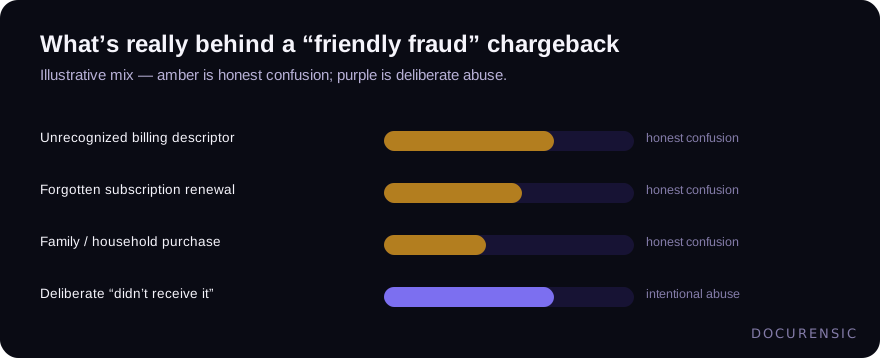
Roughly speaking, a lot of what merchants call fraud is really confusion you can design away — and the genuinely malicious slice is the one worth building an evidence machine for.
Why your fraud screening can't help
This is the part that surprises people. Your fraud tools are tuned to catch unauthorized transactions — stolen cards, mismatched identities, risky signals. Friendly fraud is authorized: it's the real cardholder, the real card, a transaction that should and does go through. There's nothing for a fraud filter to catch at checkout, because at checkout nothing is wrong. The problem only materializes weeks later, when the dispute lands. So prevention and defense both have to live outside the fraud-screening layer.
Winning the dispute: it's a documentation game
When a chargeback is friendly fraud, the merchant's remedy is representment — contesting the dispute with evidence. And representment is won or lost on the quality of your documentation. The stronger your paper trail, the better your odds:
- Proof the customer made the purchase — order records, the authorization, matching identity and address details.
- Proof of delivery or access — tracking and delivery confirmation for goods; access logs, download records, or usage data for digital products and services.
- Proof of the agreement — the terms accepted, the subscription opt-in, the cancellation policy shown at purchase.
- A record of communication — support interactions, receipts sent, any acknowledgment from the customer.
Assembled well, this evidence directly contradicts the "I never received it / I didn't authorize it" claim. The merchants who win representment consistently aren't luckier — they're better documented. They can produce a coherent, timestamped story of the transaction on demand, and the ones who lose can't.
There's a document-integrity angle here too: the evidence you submit needs to be authentic and internally consistent, and disputes sometimes involve fabricated "proof" from the other side — a doctored screenshot of a non-delivery, an altered receipt. The same document and image forensics that authenticate any evidence apply when a dispute turns on whether a submitted screenshot or receipt is genuine.
Preventing the honest half
Because a big share of friendly fraud is confusion, prevention is mostly clarity:
- Use a billing descriptor customers will actually recognize.
- Send clear receipts and unmistakable renewal reminders for subscriptions.
- Make cancellation easy and obvious — a hard-to-cancel subscription manufactures disputes.
- Confirm delivery in a way the customer sees.
Every dispute you prevent this way is one you don't have to win, and it costs a fraction of representment.
The strategy in one line
Split the problem: prevent the honest confusion with clarity, and defeat the deliberate abuse with documentation. Treat every transaction as a future dispute you might have to prove — capture the evidence at the time of sale, keep it organized, and be ready to assemble it. Friendly fraud punishes merchants who can't tell their own story after the fact. Good records are how you tell it.
Frequently asked questions
What is friendly fraud?
It's when a legitimate customer disputes a purchase they actually made — claiming they didn't receive the item or didn't authorize the charge — to get their money back while keeping the goods. It ranges from honest confusion (unrecognized charges, forgotten subscriptions) to deliberate abuse of the chargeback system.
Why don't fraud filters catch friendly fraud?
Because the transaction is authorized — it's the real cardholder using their own card, so there's nothing anomalous at checkout for a fraud filter to flag. The problem appears only later, as a dispute, which is why defense happens through documentation and representment rather than at the point of sale.
How do merchants win friendly fraud chargebacks?
Through representment backed by strong evidence: proof of purchase, proof of delivery or digital access, the agreed terms, and a record of customer communication. Assembled into a clear timeline, this evidence contradicts the cardholder's claim. Consistent winners simply document every transaction thoroughly and can produce that trail on demand.
Put it to the test
Scan a document and get a plain-English verdict in seconds. Free to start.
Keep reading

Trust Seals and Badges: The Cheapest Credibility Online
A trust seal is a picture. Copying a picture takes one right-click. Yet a row of badges in a website footer still moves purchase decisions more than almost anything else on the page.

The Two-Invoice Trade: Customs Undervaluation and the Paper That Hides It
Undervalued commercial invoices dodge duties, launder value, and expose importers to seizure. How the double-invoice game works and how compliance teams catch it in the paper.

Fake Audit Reports: Borrowing a Big Four Signature
Fabricated audit opinions and doctored financial statements borrow credibility no fraudster earned. How fake audits are built, famous ways they unravel, and how to verify one.