The 30-Second Document Check Anyone Can Do
Most documents don't need a forensic exam — but almost all deserve 30 seconds of honest attention. The three-part habit that stops you from ever saying 'it looked fine.'
Not every document deserves a forensic examination. Most don't. But almost every document deserves thirty seconds of honest attention before you act on it, and hardly anything gets even that. Here's the check I'd teach a brand-new hire on their first morning — no tools, no training, just a habit.
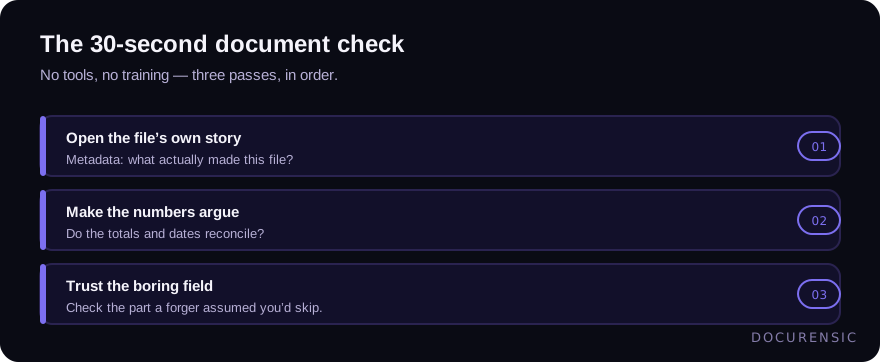
Open the file's own story first
Before you read a word of the content, look at the file itself. When was it created? When was it last modified? What made it — a scanner, a phone camera, or a PDF library that has no business touching a "scanned" bank statement? A document that claims to be a photographed original but was authored by editing software is telling on itself before you've read a single number. This is the whole idea behind reading a document's metadata: the wrapper often contradicts the story on the page.
Make the numbers argue with each other
Real documents are internally consistent because reality is. Fakes are edited one field at a time, so they drift. Do the totals actually add up? Does the year-to-date figure match the per-period amount times the number of periods? Does the date on the document fall on a day that existed and makes sense — a "statement" dated on a future Sunday is a bad start. You are not checking whether the number is big. You're checking whether the numbers agree with each other. They usually don't, when someone's been in there with a text tool.
Trust the thing that's boring to fake
Forgers fix what you look at and neglect what you don't. On an ID, that's the barcode. On an invoice, it's the vendor's real banking details versus a "please update our account" note. On a pay stub, it's the math nobody expects you to redo. Spend your thirty seconds on the part a fraudster assumed you'd skip.
That's it. Metadata, internal math, the boring field. It won't catch a professional, and it isn't meant to — that's what a real forensic check is for. But "it looked fine" is the most expensive sentence in fraud, and thirty seconds of looking is how you stop saying it.
Check the PDF you are holding
Run a free PDF X-Ray in your browser — it recovers text from the file’s earlier revisions, so you can see what a value was before it was changed. No account needed.
Keep reading
Chain of Custody for Digital Documents: Making Evidence Hold Up
A forensic finding is only as strong as the custody story behind the file. Hashes, handling, and documentation — how to keep digital document evidence defensible.
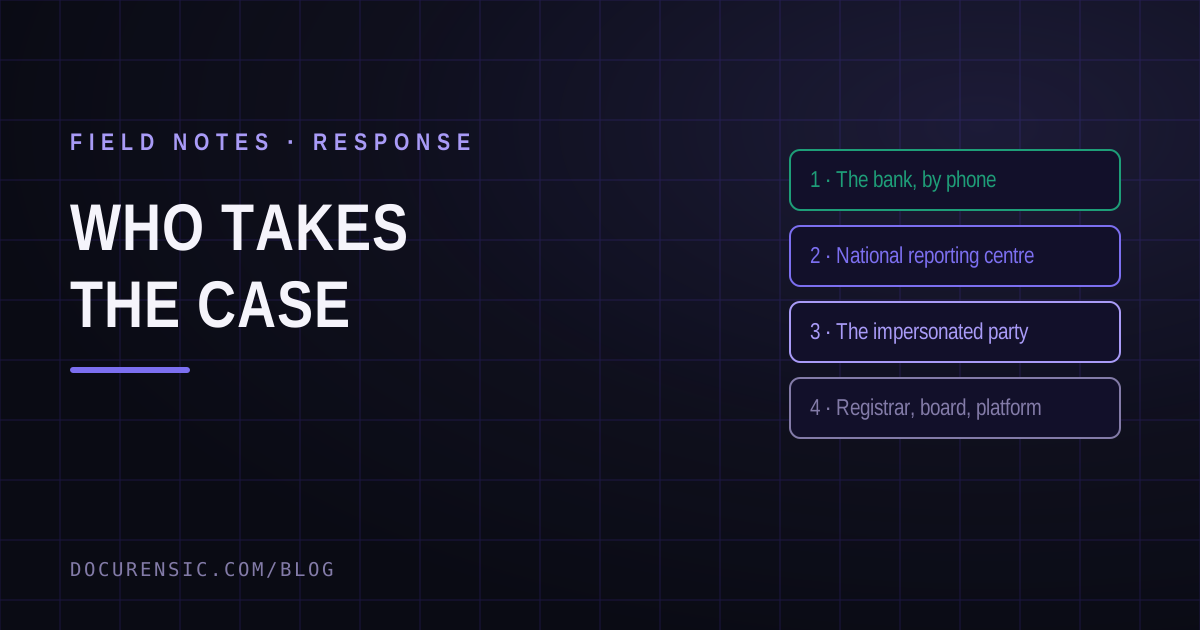
Where to Report Document Fraud: Who Takes the Case
The bank first, within hours, because that is the only step that recovers money. Then the national centres in the US, UK, Canada and Australia — and the four reports almost nobody files that change outcomes most.
When Was This Really Made? A Field Guide to Document Time
Documents carry more clocks than people expect — and fraud usually breaks at least one. Where timestamps live, which ones lie easily, and how to read them together.