Chain of Custody for Digital Documents: Making Evidence Hold Up
A forensic finding is only as strong as the custody story behind the file. Hashes, handling, and documentation — how to keep digital document evidence defensible.
Showing posts tagged “guides”.
Six practical checks — from metadata dates to hidden revision history — that reveal whether a PDF was modified after it was created, and what each one can and can't prove.
A forensic finding is only as strong as the custody story behind the file. Hashes, handling, and documentation — how to keep digital document evidence defensible.
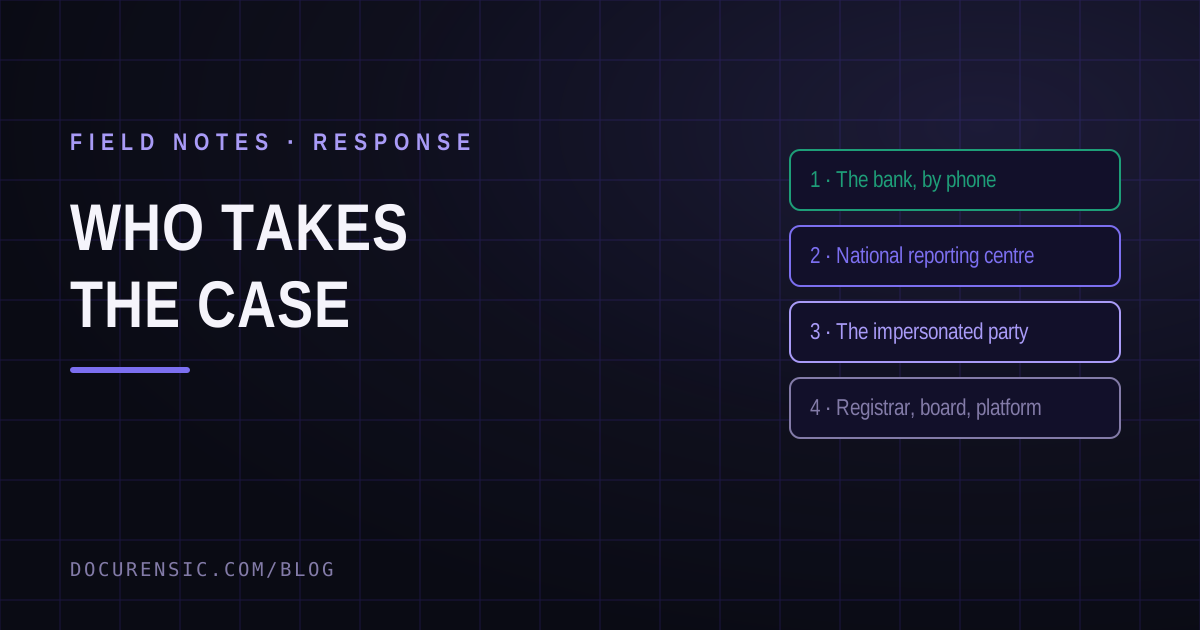
The bank first, within hours, because that is the only step that recovers money. Then the national centres in the US, UK, Canada and Australia — and the four reports almost nobody files that change outcomes most.
Documents carry more clocks than people expect — and fraud usually breaks at least one. Where timestamps live, which ones lie easily, and how to read them together.
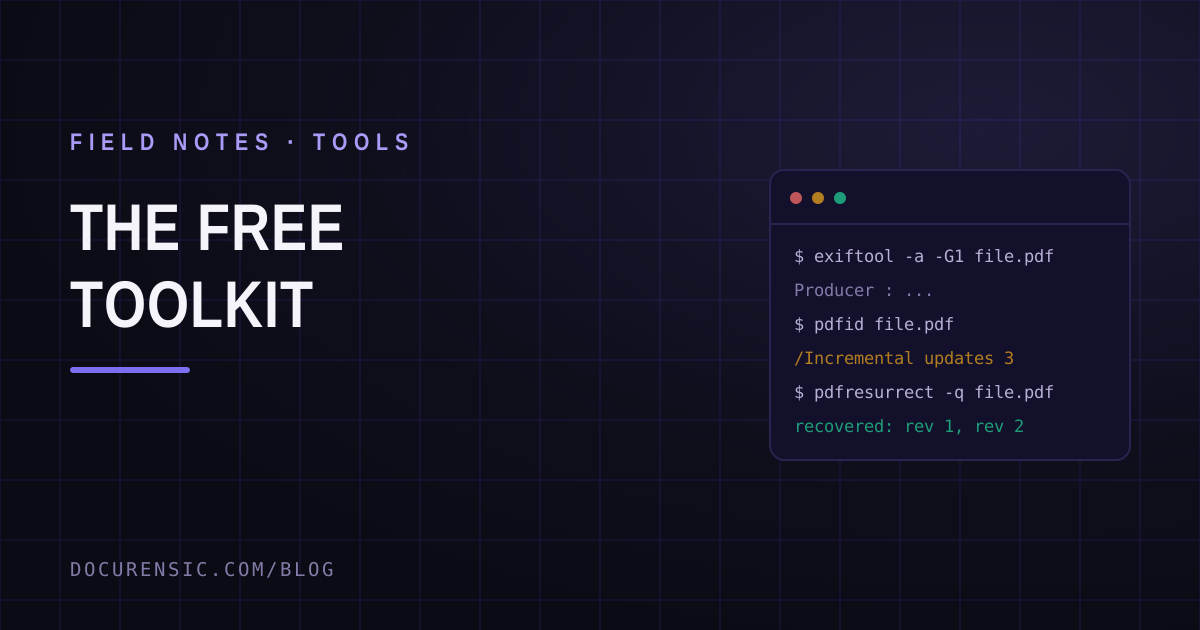
ExifTool, pdfid, qpdf, mutool, FotoForensics and the rest — what you can genuinely establish about a suspicious document with software that costs nothing, in what order, and the four things free tooling cannot do.
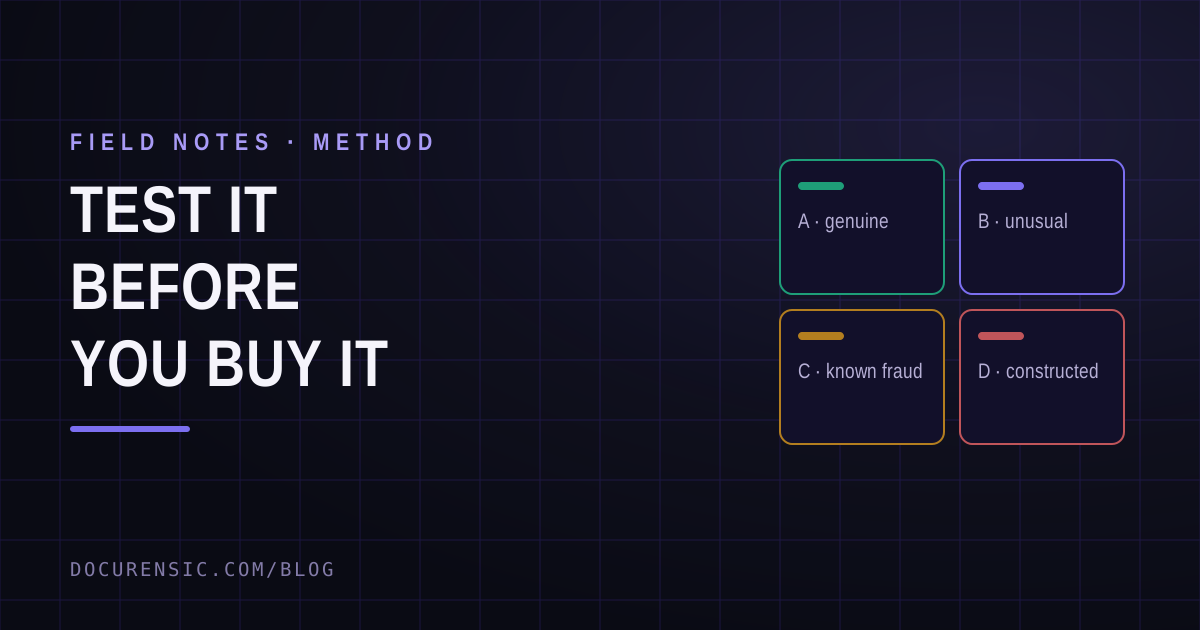
A vendor-neutral evaluation protocol you can run in a week: four corpora, a blind submission, false positives measured separately from detection, and the five failure-mode files that reveal more than the other three hund
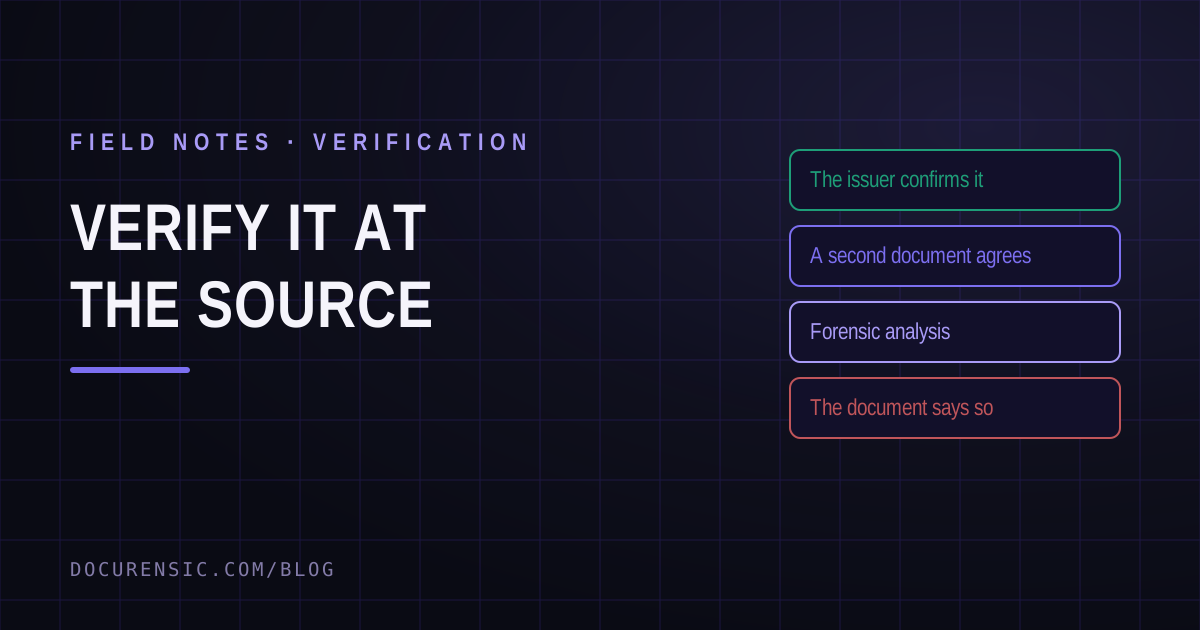
Issuer confirmation outranks every form of analysis, including ours. A directory of the free official registries — companies, sanctions, licences, education, travel documents — and the rule that stops a fake verification
Almost everything that works on a fraudulent transfer works in the first day. Almost nothing works after the third. Here is the order to work in when it has already happened.
Everything a sender types can be forged. Everything the relay servers stamped on the way through cannot be rewritten after the fact — which is why the headers are where the answer lives.
Nobody fakes a payment to steal money. They fake it to buy time — long enough to collect the goods and be somewhere else when the bank tells you nothing arrived.
Those two lines of angle brackets at the bottom of a passport are a built-in verification system. How the MRZ works, how to check its math, and where fakes get it wrong.
Fake IDs now land in onboarding queues, not just at the bar. A repeatable, six-step way to check identity documents — starting with the barcode most forgers forget.
Drawing a black box over text does not remove the text. The difference between redaction and the appearance of redaction — and a workflow to make sure you're doing the first one.