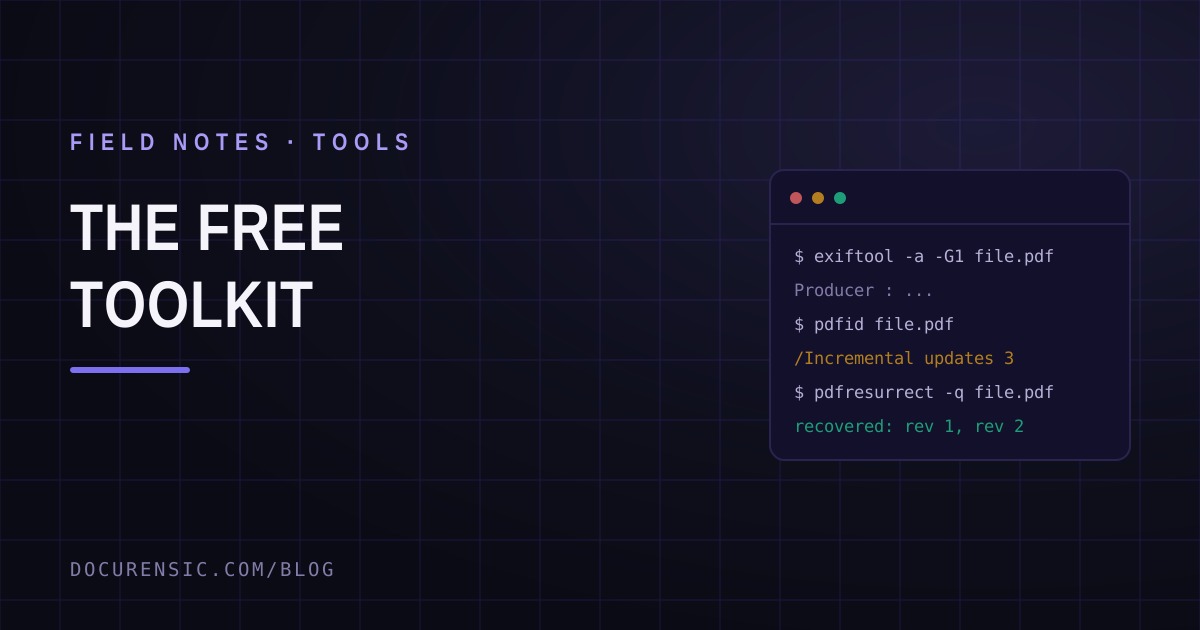
The Free Document Forensics Toolkit
ExifTool, pdfid, qpdf, mutool, FotoForensics and the rest — what you can genuinely establish about a suspicious document with software that costs nothing, in what order, and the four things free tooling cannot do.
Document fraud, forensics, and verification workflows — practical writing from the team building the engine.
ExifTool, pdfid, qpdf, mutool, FotoForensics and the rest — what you can genuinely establish about a suspicious document with software that costs nothing, in what order, and the four things free tooling cannot do.
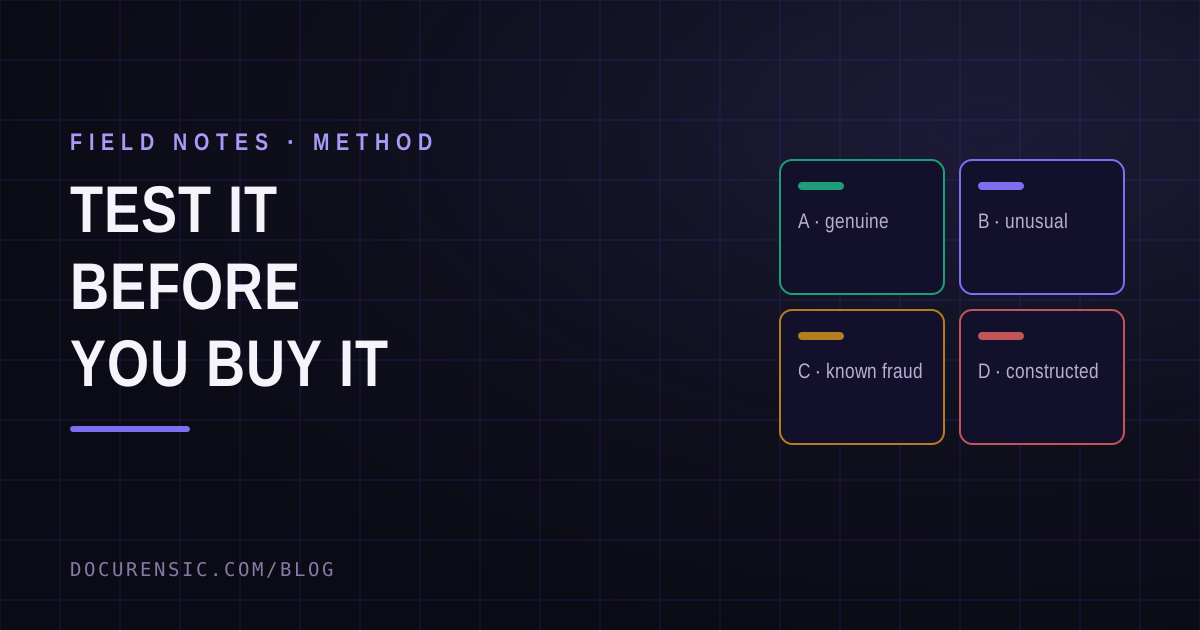
A vendor-neutral evaluation protocol you can run in a week: four corpora, a blind submission, false positives measured separately from detection, and the five failure-mode files that reveal more than the other three hund
Every document has a typographic fingerprint — and edits break it. How font substitution, spacing drift, and impossible typefaces expose altered and backdated documents.
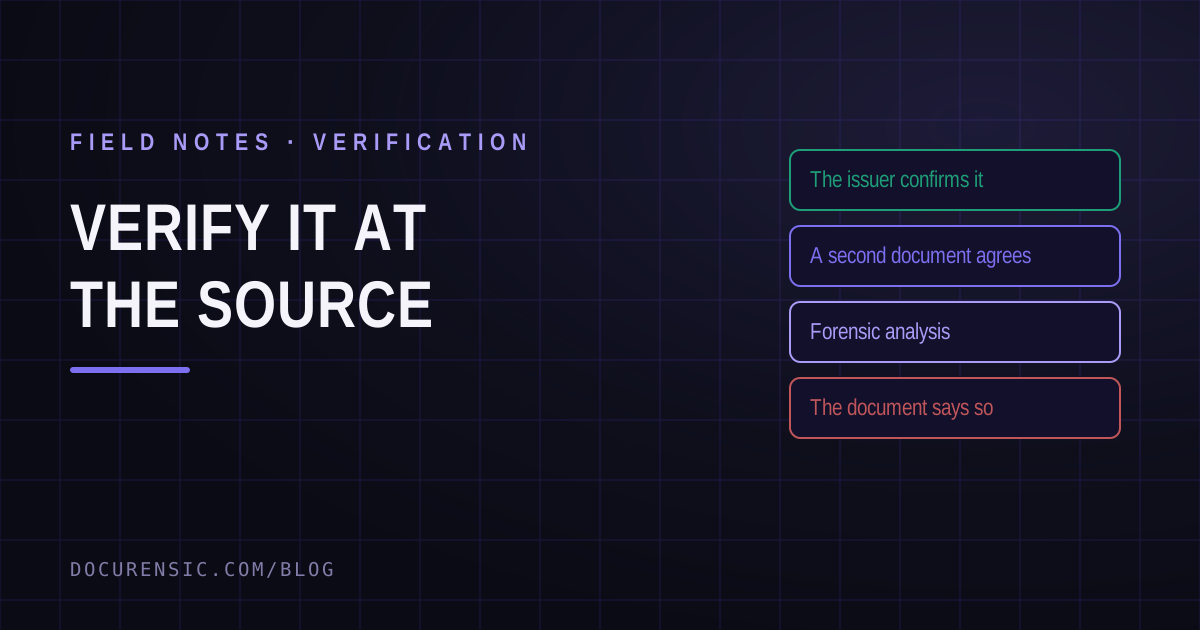
Issuer confirmation outranks every form of analysis, including ours. A directory of the free official registries — companies, sanctions, licences, education, travel documents — and the rule that stops a fake verification
Invoices, parking tickets, letters "from the bank" — QR codes turn documents into phishing delivery vehicles. How quishing works and how to handle codes you did not generate.
A tender is decided almost entirely on paperwork — certificates, accounts, references, insurance. Most of it is scored once, by someone with forty other submissions to read, and never checked again.
Almost everything that works on a fraudulent transfer works in the first day. Almost nothing works after the third. Here is the order to work in when it has already happened.

A portfolio statement is a claim about money you cannot see, issued by an institution you may not be able to contact, in a format nobody standardised. That is a lot of room to work in.
An employment verification letter is a salary claim on a letterhead. Why this document is the easiest fake in the file, and the source-check that defeats every version of it.
A recruitment scam is a document operation. There is no job, so everything the victim receives is paper — and paper produced under time pressure by someone impersonating a company they have never worked for.

Income, assets, employment, occupancy — mortgage fraud is mostly document fraud. The six file exhibits underwriters should trust least, and what each fake looks like.
A trust seal is a picture. Copying a picture takes one right-click. Yet a row of badges in a website footer still moves purchase decisions more than almost anything else on the page.